
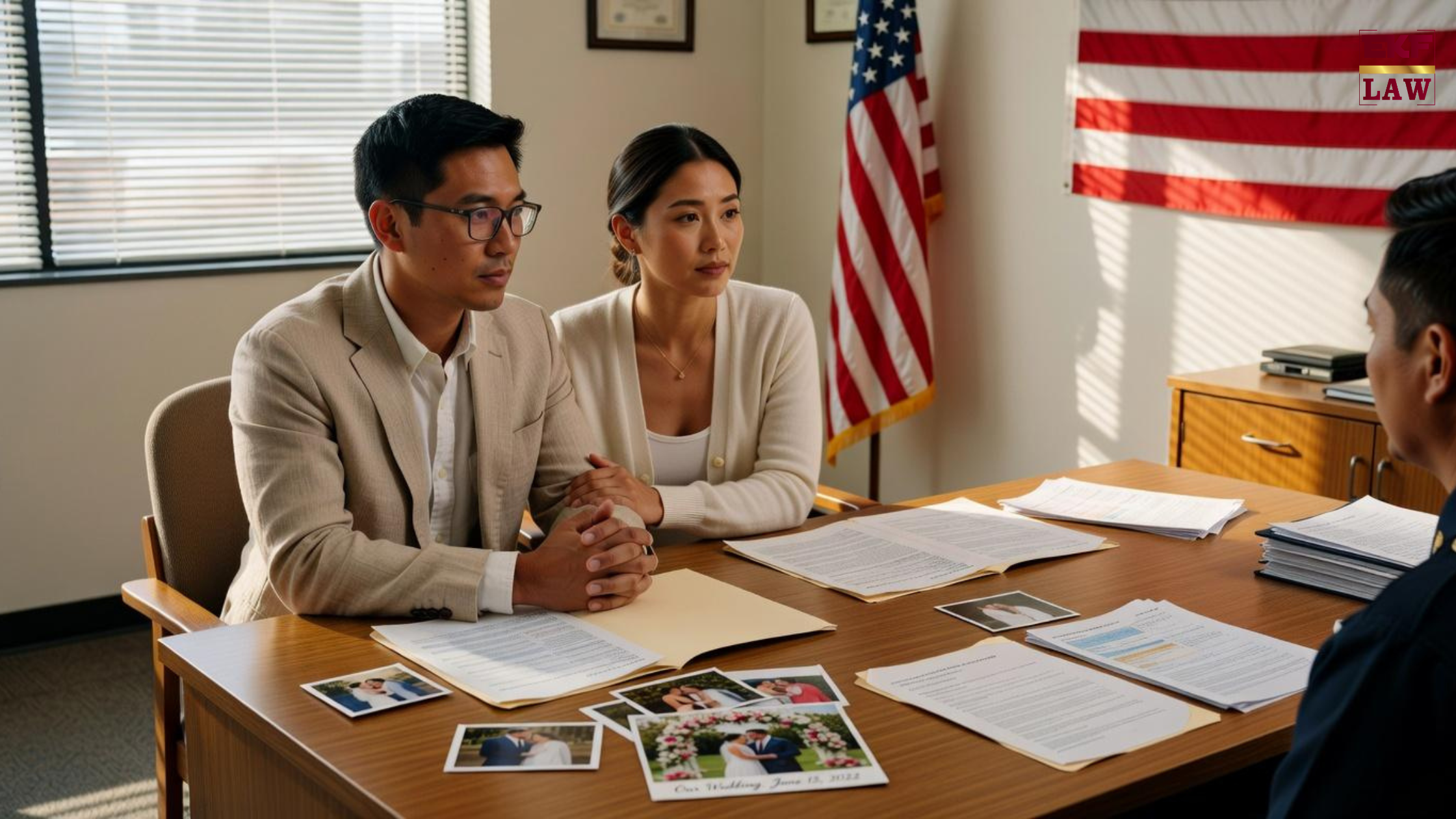
In recent months, I've noticed a troubling trend that applicants for marriage-based green cards and other immigration benefits should be aware of: USCIS interviews are becoming significantly more intense, even if the agency hasn't officially announced this change.
Although there has been no formal announcement or publicized internal policy shift, recent practices suggest that USCIS is embracing what I can only describe as "enhanced interviews"—particularly in cases involving marriage-based adjustment of status.
Just a few days ago, I accompanied clients—an American spouse and their immigrant partner—to what was supposed to be a standard marriage-based green card interview. Instead, it turned into a 4-hour ordeal. Each spouse was interviewed separately for approximately two hours. They were asked nearly 50 detailed questions—the same set for both—ranging from their daily routines and finances to living arrangements, family members, and even intimate aspects of their relationship.
This wasn't just a conversation to assess the bona fides of their marriage. It felt more like an interrogation. After each interview, the officer printed out the questions and answers, had the client review and sign them, and then called in a second officer to witness and co-sign the document. As the attorney, I was present throughout and observed the entire process.
The interviewing officer was professional and civil throughout. But make no mistake—the intensity of the questioning, the separation of the couple, the written record with signatures, and the presence of a second USCIS officer are clear signs that USCIS is elevating scrutiny.
While USCIS hasn't made any public declarations, this shift appears to be consistent with broader immigration enforcement priorities shaped by the Trump administration's executive orders and policy outlook. Even after changes in leadership, some of these procedures have remained—and in some offices, intensified.
These enhanced interviews reflect a presumption of fraud or ineligibility, especially in marriage-based cases. Officers are increasingly approaching interviews as opportunities to detect fraud, rather than as a neutral fact-finding process. And while good officers remain fair and courteous, the burden is on the applicant to be fully prepared and credible.